When considering vaping options, many users ask, “what is the difference between refillable and disposable vapes?” This question highlights the significant choices available. Refillable vapes offer customization. Users can select different e-liquids and adjust settings to suit their preferences. This flexibility can enhance the vaping experience, making it unique for each individual.
On the other hand, disposable vapes come ready to use. They require no maintenance or refilling. For those new to vaping, disposables are simpler and more convenient. Users can try different flavors without commitment. However, the environmental impact of disposables is becoming a concern.
Understanding these differences is crucial. Each option has its pros and cons. The choice ultimately depends on personal preference and lifestyle. It's essential to weigh convenience against sustainability. Choosing the right vape requires thoughtful decision-making.
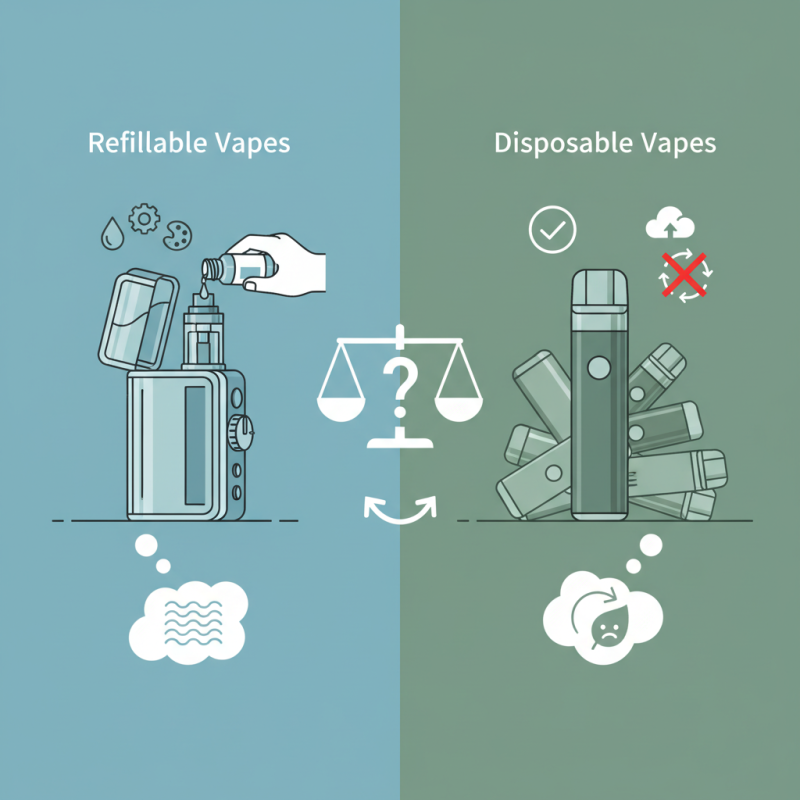
Refillable vapes offer several key features that set them apart from their disposable counterparts. One significant advantage is customization. Users can choose their preferred e-liquid flavors and nicotine strengths, which allows for a tailored vaping experience. According to a 2022 industry report, approximately 45% of vapers prefer refillable devices for this reason.
Durability is another highlight. Refilling vapes can last months or even years with proper maintenance. In contrast, disposable vapes contribute to environmental waste. A report from the World Health Organization indicated that over 1.5 million tons of waste come from disposable vapes annually. This disparity forces many to rethink their choices based on sustainability.
Cost-effectiveness is often discussed but can be misleading. While refillable vapes may have a higher initial investment, the long-term savings can be significant. A study published by a vaping research group notes that users can save up to 60% over a year with refillable devices. However, it is essential to consider the occasional costs of maintenance and potential learning curves for new users. Despite these benefits, some may find refillable systems complicated. The debate continues, highlighting both advantages and challenges in choosing between refillable and disposable options.
| Feature | Refillable Vapes | Disposable Vapes |
|---|---|---|
| Cost Efficiency | Lower long-term costs | Higher per-use costs |
| Customization | High, with flavor and nicotine options | Limited to pre-set flavors |
| Environmental Impact | Less waste; reusable components | More waste; single-use |
| Ease of Use | Requires more knowledge | User-friendly, no setup required |
| Battery Life | Replaceable batteries, longer life | Fixed battery, shorter life |
| Flavor Variety | Numerous options available | Few choices, standard flavors |
: Refillable vapes offer customization, durability, and potential cost savings over time.
Refillable vapes may require a higher initial cost but can save users money in the long run.
Yes, refillable vapes generate less waste than disposables, making them a more sustainable choice.
Maintenance can be a bit tricky, especially for new users. It may require some learning.
Disposable vapes contribute millions of tons of waste each year, mainly plastic.
Yes, their production can be harmful, and improper use may lead to more waste than expected.
Absolutely! Users can select their favorite e-liquid flavors and nicotine strengths when using refillable vapes.
Users should think about cost, convenience, frequency of use, and their personal values regarding sustainability.
Yes, they can seem complicated to some users, and there are periodic maintenance costs to consider.
It depends on individual usage, but they generally require less frequent purchasing than disposables.
In the discussion of "China Best Refillable vs Disposable Vapes: Which is Better?", it is essential to understand the key differences between these two vaping options. Refillable vapes offer significant benefits such as customizable flavors, better cost-effectiveness over time, and a potential reduction in environmental impact due to their reusability. On the other hand, disposable vapes are favored for their convenience and portability, making them an ideal choice for users who prioritize ease of use.
When examining what is the difference between refillable and disposable vapes, it becomes clear that user preferences and lifestyle play a crucial role in this decision. While some may lean towards refillables for their long-term savings and variety, others may choose disposables for their hassle-free nature. Ultimately, each option comes with its pros and cons, and the best choice depends on individual needs and values.

 ERA Vape