What Materials Are Used in China Best Vape Devices?

Time:2026-10-22 Author:Oliver
0%

Understanding what materials are used in vape device manufacturing requires more than listing metals and plastics. It requires tracing each material’s purpose, durability, and possible interaction with heat or liquid.

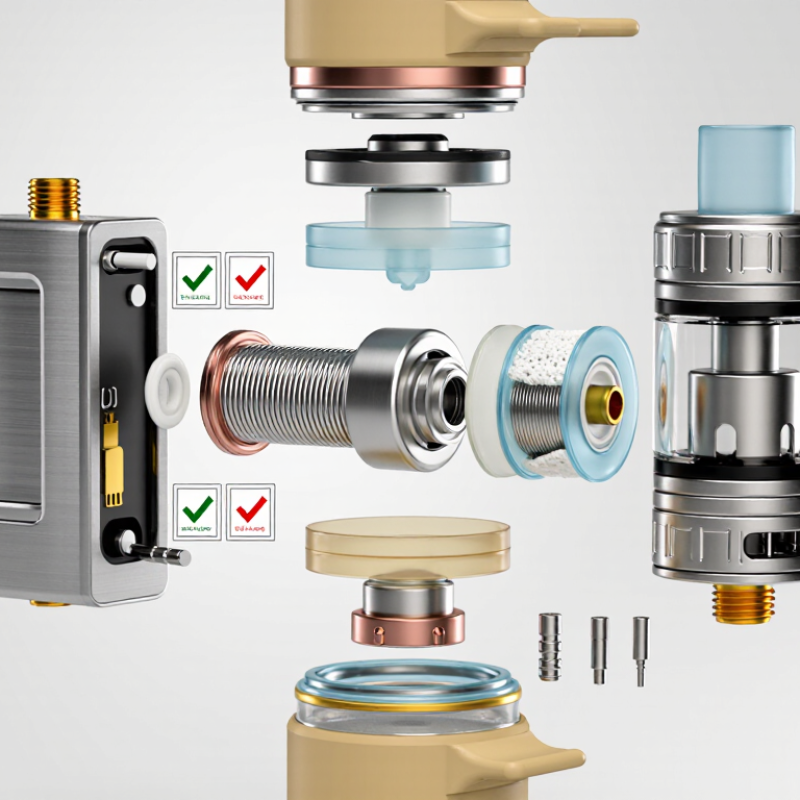
Most responsibly produced devices use stainless steel for the outer body, threaded connections, and heating chamber. Some coils contain nickel or chromium alloys because they heat quickly and resist corrosion. Glass is often selected for liquid reservoirs because it is stable and easy to inspect. Polycarbonate, PCTG, and PEEK may appear in structural parts, although their heat resistance differs significantly.

Small details matter.

Silicone seals help prevent leaks. Copper or brass may carry electrical current through the contacts. Ceramic components can support controlled heating, while cotton or other porous materials may hold liquid near the coil. Manufacturing quality remains critical. Poorly finished threads, weak solder joints, or unsuitable adhesives can introduce avoidable risks.

Dr. Ana María Rule, an environmental health researcher who has studied electronic-device emissions, stated, “The metals in e-cigarette aerosol may originate from the heating coil, solder joints, or other device components.” This observation deserves careful attention, especially when comparing products from different factories.

A credible review should examine material certificates, temperature testing, corrosion resistance, and quality-control records. It should also avoid assuming that a familiar material is automatically safe in every condition. I have found that specifications can look impressive, yet real performance may vary between production batches.

This article explores China-made devices through a materials and manufacturing lens. It focuses on documented construction, responsible design, and transparent testing. No device should be judged by appearance alone. Reliability begins inside.
What Materials Are Used in China Best Vape Devices?

Core Materials Used in China’s Best Vape Devices

Core Materials Used in China’s Best Vape Devices

Reliable vape devices usually combine stainless steel, aluminum, glass, engineering plastics, silicone, and lithium-ion batteries. Stainless steel supports the heating chamber and threaded connections. It resists corrosion and keeps its shape under repeated heating. Aluminum reduces weight, although thin walls can dent during daily use.

The liquid-contact path needs greater care. Borosilicate glass offers strong chemical resistance and does not easily retain flavors. PCTG or similar food-contact plastics can reduce breakage, but quality depends on formulation and molding control. Cotton, ceramic, or metal mesh may serve as the wicking material. Each option changes liquid absorption, heating speed, and residue formation. Silicone seals help prevent leaks around the pod and mouthpiece. Small details matter.

Safety data deserves attention. A U.S. Consumer Product Safety Commission report recorded 2,035 e-cigarette explosion and burn incidents from 2009 to 2015. Proper battery insulation, thermal protection, and certified charging components are therefore essential. IEC 62133-2 covers safety requirements for portable lithium-ion cells and batteries. UL 8139 also evaluates electrical and mechanical safety for vaping devices. These standards do not guarantee perfect manufacturing. That remains an uncomfortable weakness.

Tips: Check for clean glass, smooth metal threads, intact seals, and clear battery specifications. Avoid damaged cells, loose charging ports, or unexplained plastic odors. WHO reports that aerosol exposure can include harmful substances, so material quality is only one part of responsible product evaluation.

Battery Components and Electrical Materials

What Materials Are Used in China Best Vape Devices?

Battery Components and Electrical Materials

Reliable vape devices depend on carefully selected battery and electrical materials. Most use rechargeable lithium-ion cells, with lithium-based cathode materials and graphite anodes storing energy. A thin polymer separator keeps the electrodes apart while allowing ion movement. It is delicate.

Aluminum commonly forms the battery casing because it is light and helps manage heat. Copper appears in current collectors, wiring, and charging contacts because it conducts electricity efficiently. Nickel-plated steel may protect connection points from corrosion. Around these parts, heat-resistant polymers provide insulation and reduce accidental contact.

The control board usually contains silicon chips, copper traces, resistors, capacitors, and protective sensors. A battery management circuit can monitor voltage, current, and temperature during normal operation. Silicone seals may shield openings from moisture, while ceramic components can tolerate localized heat near electrical contacts. Material traceability matters more than a polished exterior. That is easy to overlook.

From a quality-control perspective, manufacturers should verify cell consistency, insulation thickness, solder strength, and charging performance. Independent testing can identify overheating risks or unstable electrical behavior. Yet material names alone do not prove device quality. A specification sheet may omit sourcing details, aging results, or real-use limitations. Engineers should question incomplete data, even when the device appears well finished.

What Materials Are Used in China Best Vape Devices?

Battery Components and Electrical Materials

The chart shows representative midpoint thicknesses for common lithium-ion battery layers and current collectors used in compact electronic devices. Typical commercial ranges are approximately 12–20 μm for aluminum foil, 50–100 μm for cathode coating, 10–25 μm for the polyolefin separator, 40–80 μm for anode coating, and 6–12 μm for copper foil. Actual designs vary by cell format, capacity, and safety requirements.

Heating Coils and Wick Materials

When people compare China’s best vape devices, heating coils deserve close attention. Their materials affect heat response, resistance stability, flavor, and service life. Stainless steel coils heat evenly and can resist corrosion when properly manufactured. Kanthal is valued for stable performance and predictable heating. Nichrome usually heats faster, but its resistance can change differently across designs. Mesh coils spread heat across a wider surface, reducing noticeable hot spots. Material choice matters more than appearance.

Wick materials also shape the experience. Organic cotton can deliver a clean taste and absorbs e-liquid efficiently. Ceramic wicks tolerate repeated heating, but their flavor profile may feel less direct. Silica is heat-resistant, though some users find it less soft and responsive. A perfect wick does not exist. Manufacturing quality, airflow, and liquid viscosity also influence results.

Tips: Check the coil material listed by the seller. Look for consistent resistance and clean construction. Avoid damaged mesh or loose cotton. Replace the coil when taste turns harsh, vapor becomes unusually weak, or the wick darkens heavily. Product pages sometimes use vague terms, so independent testing reports are useful. Claims should be questioned.

Cartridge, Tank, and Mouthpiece Materials

The best vape devices use carefully selected materials in the cartridge and tank. Glass offers a clean surface and resists flavor absorption. Stainless steel, especially 316L grades, supports structural strength and heat control. Many cartridges use PCTG or similar polymers because they are light and impact-resistant. However, some liquids may stress plastic over time. Ceramic heating chambers can reduce direct metal contact, but their quality depends on firing consistency and inspection.

The mouthpiece needs a smooth, stable, low-odor material. Food-contact compatible polymers are common, while stainless steel provides durability and easier cleaning. Poorly finished edges can irritate the lips. The National Academies’ 2018 review examined more than 800 scientific studies and reported evidence that metals may enter aerosol from device components. That finding makes material traceability important. A shiny surface proves little.

Tips: Ask for material specifications, batch testing, and documented temperature testing. Check whether the cartridge seal sits evenly around the liquid path. Avoid cracked tanks, loose mouthpieces, or unusual odors. Washable parts should dry completely before reuse. Material labels are helpful, but they are not proof. Independent laboratory results matter more. Even experienced buyers can overlook internal soldering or weak seals.

Safety, Durability, and Material Selection Standards

What Materials Are Used in China Best Vape Devices?

Safety, durability, and material selection standards should guide every device decision. Stainless steel is commonly used for the outer frame, heating chamber, and threaded connections. It resists corrosion and tolerates repeated cleaning. Food-grade glass is often selected for liquid containers because it limits odor absorption and chemical interaction. Some compact parts use PCTG or similar engineering plastics. These materials reduce weight, but heat exposure still requires testing.

Material quality is not enough. The complete structure matters. The World Health Organization’s 2023 tobacco report identified metals, including nickel, chromium, and lead, among substances that may appear in electronic aerosol emissions. Poor welding, damaged coatings, or overheated coils can increase concern.

UL 8139 provides electrical safety guidance for vaping devices, while IEC 62133-2 addresses rechargeable lithium battery safety. These standards do not guarantee perfect products. Manufacturing inspection remains essential. No material is flawless.

Tips: Check for smooth seams, secure charging ports, and clear material information. Avoid cracked glass, loose threads, or unusual odors. A durable device should feel balanced, not excessively heavy. Ask whether battery protection, temperature control, and batch testing are documented. Independent testing is more convincing than marketing language. This is where many product descriptions remain incomplete.

FAQS

What materials are commonly used in rechargeable vape batteries?

Lithium-ion cells usually contain lithium-based cathodes, graphite anodes, and polymer separators. The separator is delicate. Aluminum often forms the casing.

Why are copper and nickel-plated steel used inside devices?

Copper carries electricity through wiring, contacts, and current collectors. Nickel-plated steel helps protect connection points from corrosion.

What does the control board usually contain?

It may include silicon chips, copper traces, resistors, capacitors, and protective sensors. A management circuit can monitor voltage, current, and temperature.

Which coil materials are commonly used?

Stainless steel resists corrosion and heats evenly. Kanthal offers predictable heating. Nichrome often heats faster. Mesh spreads heat across a wider surface.

How do wick materials affect performance?

Organic cotton absorbs liquid efficiently and may provide a clean taste. Ceramic tolerates repeated heating. Silica resists heat but can feel less responsive.

When should a heating coil be replaced?

Replace it when the taste becomes harsh or vapor weakens. Heavy darkening also matters. Do not use damaged mesh or loose cotton.

What materials are used for cartridges, tanks, and mouthpieces?

Glass resists flavor absorption. Stainless steel provides strength and easier cleaning. PCTG-type polymers are light and impact-resistant. Food-contact compatible polymers suit mouthpieces.

What should buyers check before choosing a device?

Look for material specifications, batch testing, temperature testing, and consistent resistance. Inspect seals, edges, and soldering. A shiny surface proves little.

Can material labels guarantee device quality?

No. Labels may omit sourcing, aging results, or real-use limits. Independent testing gives stronger evidence. I may still miss hidden defects.

Conclusion

Understanding what materials are used in vape device manufacturing is essential for evaluating performance, reliability, and user safety. China’s best vape devices typically combine durable metal alloys, engineering plastics, glass, ceramics, and carefully selected electronic components. Batteries rely on protective casings, conductive metals, insulation layers, and control circuitry to support stable power delivery. Heating systems commonly use resistance metals for coils, along with cotton, ceramic, or other heat-resistant wick materials designed to manage liquid flow and temperature.

Cartridges and tanks may be made from glass, stainless steel, or food-contact-grade plastics, while mouthpieces often use heat-resistant polymers or metal alloys for comfort and durability. Material selection should consider thermal stability, corrosion resistance, electrical insulation, structural strength, and consistency in manufacturing. Reliable production also requires quality testing, secure assembly, leakage prevention, and appropriate protection against overheating, short circuits, and excessive charging. Together, these standards help create devices that are durable, consistent, and designed with responsible safety considerations in mind.

Oliver

Oliver

Oliver is a seasoned marketing professional with a wealth of expertise in driving brand awareness and engagement. With a deep understanding of our company's product offerings, he consistently delivers high-quality content that enriches our professional blog. His insights not only shed light on......