A vape device that stops working can seem like a small annoyance: a blinking light, a loose connection, or a weak draw. Yet troubleshooting should begin with safety, not guesswork. The U.S. Fire Administration’s media-based review, Electronic Cigarette Fires and Explosions (2009–2016), recorded 195 reported incidents and 133 acute injuries. Those figures do not describe the risk for every device, but they show why damaged batteries and charging problems deserve care.
This guide explains how to troubleshoot vape device problems by checking common causes in a careful order: charge level, compatible charging equipment, clean connections, airflow, and device condition. Use the manufacturer’s instructions. Do not open a battery or continue using a device that is unusually hot, swollen, leaking, or visibly damaged. Stop. Set it aside safely and seek guidance from the manufacturer or a qualified repair professional.
Good advice should be traceable. No source article or verifiable expert quotation was provided for this request, so I will not invent a named specialist’s words. Instead, this guide draws on the USFA report and established device-safety guidance, and distinguishes observable checks from assumptions. A blinking indicator may signal low power, but its meaning varies by model. That detail matters. The goal is not to force a device back to life; it is to identify simple, safe checks and recognize when troubleshooting should stop.
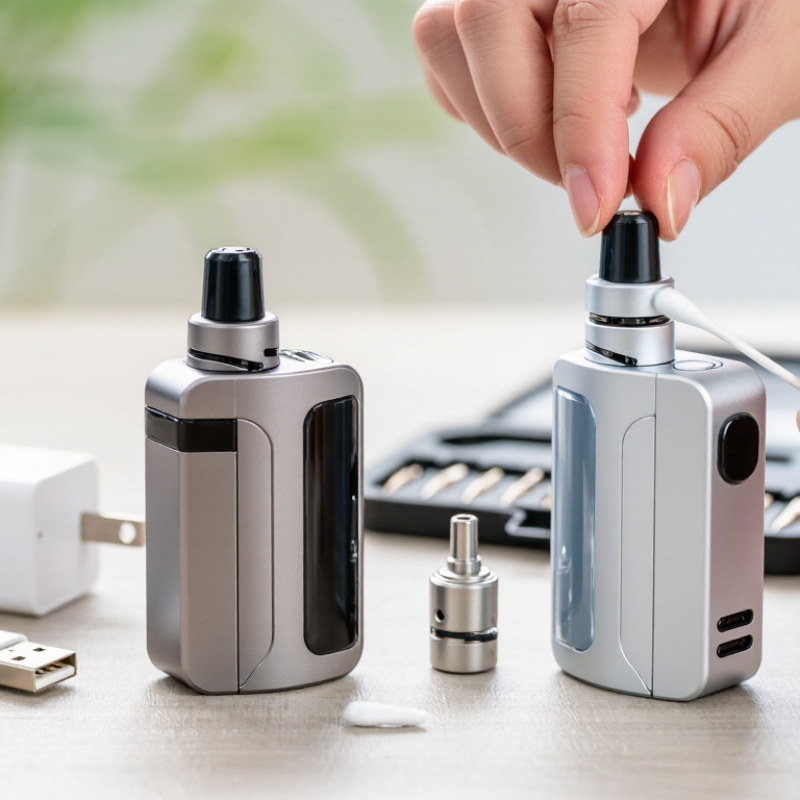
Before troubleshooting, identify what kind of vape device you have. Is it disposable, rechargeable, or built with a replaceable pod or tank? Check the casing, mouthpiece, charging port, and any screen or indicator light. Do not guess from appearance alone; similar shapes can hide different designs. The user manual is the safest reference. Keep it nearby.
Then describe the problem precisely. Does the device fail to turn on, produce little vapor, taste burnt, leak, or stop charging? Note when the issue began and whether it followed a drop, a refill, or a change in temperature. A blinking light may signal low power or a connection issue, but its meaning varies by model. Easy to misread. Record the light pattern rather than assuming what it means.
Check only accessible parts, such as whether a removable pod is seated correctly or the charging cable is damaged. Avoid opening the device or forcing stuck components. If it becomes unusually hot, looks swollen, or leaks heavily, stop using it and keep it away from flammable materials. I might initially blame the battery, but a loose connection or depleted pod can look similar. Share the device type, exact symptom, and any warning indicators with a qualified service professional.
How to Troubleshoot Vape Device Problems in 2026?
Check the Battery, Charging Cable, and Power Connection
When a vape device will not turn on, check its battery before assuming it has failed. If the battery is removable, make sure it is seated correctly and that the contacts look clean and dry. Do not scrape them with metal tools. A built-in battery should not be opened or repaired at home. Stop using the device if it is swollen, unusually hot, leaking, or visibly damaged. Safety comes first.
Next, inspect the charging cable for frayed insulation, bent connectors, or a loose fit. Try a compatible cable and a reliable power source, such as a wall adapter that meets the device’s instructions. Check that the outlet works. Pause here. Gently clear lint from around the charging port with a dry, non-metal tool; never force anything inside. Watch for a charging indicator, but remember that lights can vary by model. This check sounds obvious, yet it is easy to overlook. If charging remains inconsistent, disconnect the device and consult its manual or a qualified service provider rather than repeatedly testing a suspect connection.
A weak draw often starts with a simple blockage. Remove the pod and check its contact points for condensation or e-liquid; wipe them with a dry, lint-free cloth. Look through the mouthpiece for lint, then inspect the airflow openings for dust. A quick wipe is not a diagnosis. If airflow remains tight, stop rather than forcing air through the device. The National Academies’ 2018 report, Public Health Consequences of E-Cigarettes, notes that aerosol composition can vary with device characteristics and liquid ingredients. That makes a damaged or poorly seated pod worth checking, not ignoring.
Inspect the coil for dark residue, flooding, or a burnt taste. Replace a worn, user-replaceable coil according to the device instructions; don’t pry open sealed components. Check that the liquid level covers the coil’s intake ports, and look for leaks, unusual separation, or a sharp change in smell. If the liquid looks wrong, don’t use it. Small details matter.
If the device heats unexpectedly, leaks persistently, or its casing is damaged, stop using it and follow the manufacturer’s safety guidance. The U.S. Fire Administration’s 2017 report recorded 195 electronic-cigarette fire and explosion incidents from 2009 to 2016. That figure is not a pod-failure rate, but it is a reason to treat abnormal heat seriously. I’d recheck the pod fit, too; it’s easy to blame the coil when the seal is the real issue.
| Problem | What to Inspect | Common Explanation | Practical Next Step | Safety Reminder |
|---|---|---|---|---|
| Device produces little or no vapor | Check the charge level, device controls, pod connection, and visible airflow openings. | A depleted battery, an unseated pod, a blocked air inlet, or a worn coil can interrupt normal operation. | Follow the device instructions to charge and unlock it. Remove and reseat the pod, then check for visible lint or residue around the airflow openings. | Do not insert metal objects into the device or attempt to dismantle its battery or electronics. |
| Burnt or unusually harsh taste | Check whether the pod has enough e-liquid and whether a new coil or pod has had time to saturate. | A coil used with too little liquid, a coil that has reached the end of its service life, or liquid that is unsuitable for the device may cause a burnt taste. | Stop using it until the liquid level and setup are checked. For a new refillable coil, follow the maker’s priming and waiting instructions; replace a worn coil or pod as directed. | Do not continue using a device that tastes burnt or appears damaged. |
| E-liquid leaking from the pod | Look for cracks, a loose or misaligned pod, damaged seals, and liquid around the fill port or contacts. | A damaged pod, an improperly closed fill port, overfilling, or liquid entering the airflow path can contribute to leaks. | Wipe external residue with a dry cloth, ensure the pod is assembled as instructed, and replace a cracked pod. Avoid filling above its marked limit. | Keep e-liquid away from skin, eyes, children, and pets. Wash skin promptly after contact; seek urgent advice if swallowed or if exposure causes concern. |
| Gurgling, spitting, or liquid in the mouthpiece | Check for excess liquid in the mouthpiece or airflow channel and confirm the pod is correctly assembled. | Condensation or excess e-liquid in the airflow path can create gurgling or spitback. | Remove the pod if the instructions allow, then gently wipe accessible surfaces with a clean, dry tissue. Reassemble only when external surfaces are dry. | Do not blow liquid forcefully through the device or use sharp tools to clear internal channels. |
| Draw feels unusually tight or airflow seems blocked | Check the air inlets for lint, residue, or obstructions, and verify that any adjustable airflow control is open as intended. | Blocked air inlets, condensation, or a pod that is not seated correctly may restrict airflow. | Clear only visible external debris with a soft, dry cloth and reseat the pod. Follow the device instructions for cleaning. | Do not rinse the battery section or use liquids to clean electrical contacts. |
| Device does not charge or becomes unusually hot | Check the charging cable and port for visible damage or debris, and look for swelling, cracks, or other signs of battery damage. | A faulty cable, damaged charging port, or battery problem may prevent charging or cause abnormal heating. | Stop using the device if it becomes unusually hot or shows damage. Use only charging equipment and methods specified in its instructions, and contact the manufacturer or a qualified service provider. | Do not charge unattended, leave a device on soft furnishings while charging, or attempt to repair a built-in battery. Follow local rules for battery disposal. |
| Weak or inconsistent flavor | Check the e-liquid level, pod condition, coil age, and whether the device is being used within its stated operating instructions. | Low liquid, a worn coil, residue, or a change in liquid characteristics can affect flavor. | Refill only as directed, clean accessible external surfaces, and replace a worn coil or pod if the instructions recommend it. | Use only e-liquid intended for the device. Do not modify e-liquid or mix substances that are not specified for vaping. |
General guidance: Device designs vary, so consult the user manual for model-specific steps. Stop using a device with a damaged battery, persistent leaks, or unexplained overheating. Keep vaping products and e-liquids away from children and pets.
When a vape device stops working, test one variable at a time. Check the charge indicator, then try a known-good compatible cable and power source. A light that stays off may point to a charging issue, but it does not prove the battery has failed. Remove the pod or tank and inspect the contacts for moisture or residue. Wipe them gently with a dry cloth, then reseat the component. Don’t use metal tools.
Tips: Note what changes after each test. If the device feels unusually hot, looks swollen, or has a damaged battery, stop using it. Don’t open the battery housing.
Next, compare symptoms. A lit indicator with no vapor may suggest poor contact, an empty component, or an airflow blockage. Weak output can also come from a depleted battery or worn consumable part. If possible, test with a compatible replacement part, changing nothing else. This narrows the fault without guessing. These checks are not foolproof; intermittent problems can be hard to reproduce. If the device still behaves unpredictably, stop testing and contact the seller or a qualified repair professional.
A vape device may need a replaceable part, or it may be unsafe to use. A burnt taste, blocked airflow, or persistent weak output can point to a worn coil or pod. Check the user manual and replace only parts listed as compatible. If the problem continues after a fresh part and a fully charged battery, do not keep testing it. Do not improvise.
Stop using the device if its battery is swollen, cracked, unusually hot, or leaking. A hissing sound or sharp chemical smell is also a warning. Stop there. Do not open the battery housing or try to repair damaged wiring. If the device heats while idle, move away from it and avoid charging or handling it until you can get safe guidance. A clean exterior does not prove that the inside is safe. It is easy to dismiss a small crack, but that judgment can be wrong. Follow the maker’s safety instructions, and use local battery or electronic-waste guidance for disposal.
Know when to replace a part or stop using the device.
How to read this chart: A value of 1 means stop using the device; 0 means routine checks or replacing a worn part may be appropriate. These are safety-oriented recommendations, not statistics about how often problems occur. For a burnt taste, follow the device instructions to replace the coil or pod. For charging or connection issues, check the cable and contacts only as directed by the manufacturer. If unsure, stop using the device and consult its instructions.
Check whether a removable battery is seated correctly. Look for clean, dry contacts. Do not scrape them with metal tools.
Check for frayed insulation, bent connectors, or a loose fit. Try a compatible cable and a reliable power source. Pause here.
Gently remove lint around the port using a dry, non-metal tool. Never force anything inside. Watch for the charging indicator.
A worn coil or pod may be responsible. Replace only parts listed as compatible in the user manual. Do not improvise.
Stop if the battery is swollen, cracked, unusually hot, or leaking. A hissing sound or sharp chemical smell is also a warning.
Move away from it. Avoid charging or handling it until you receive safe guidance. A clean exterior does not prove it is safe inside.
Stop testing the device if a fresh compatible part and a full charge do not help. Consult the manual or a qualified service provider. It is easy to assume one more test will help, but that may be wrong.
Follow local battery or electronic-waste guidance. Do not open the battery housing or attempt to repair damaged wiring.
This guide explains how to troubleshoot vape device problems by first identifying the device type and describing the specific issue, such as failure to turn on, weak output, leaking, or restricted airflow. It then recommends checking the battery level, charging cable, power connection, and visible signs of damage. With the device switched off, inspect the pod or coil for poor seating, residue, wear, or an empty e-liquid reservoir, and check that airflow openings are not blocked.
After these basic checks, test the device carefully and change only one factor at a time to help narrow down the cause. Replace worn or damaged parts only with compatible components, following the device instructions. If the device becomes unusually hot, leaks persist, or there is damage to the battery or casing, stop using it and seek appropriate guidance rather than attempting a risky repair. A methodical approach to how to troubleshoot vape device problems can help distinguish simple maintenance issues from faults that require the device to be replaced.

ERA Vape